Sunday, July 26, 2009
2012 Olympic Costs
I read in a newspaper today that the last time London hosted the Olympics they cost around £600,000 to host. (Approximately £16 million in today's money). For the 2012 Olympics they have they have spend over £150 million on consultants to keep the costs down - for that they could almost have paid for the 1948 games 10 times over!


Thursday, July 2, 2009
Tennis scoring
I've been watching Wimbledon this week and it got me thinking about how bizarre the scoring is in tennis. The scores start at 0 (or "love" as it is referred to), and a player's score increases (when a point is won) to 15, then 30, 40 and "game" (game won). Why are the first 2 points worth 15 yet the third one is only worth 10?! If both players get to 40 then it is referred to as "Deuce" and the player who wins the next point gets "advantage", if they win again they win the game, otherwise it returns to deuce. Confused?
It would be so much easier if the scoring went 0-1-2-3-4 and to get rid of deuce the first player to 4 and be more than 2 points clear wins the game, otherwise they keep playing. This is exactly what happens at the moment but in a much more confusing manner.
Also, why if a player "faults" on a serve (i.e. hits it out) do they get another serve? You don't see people in other sports getting a second chance? Lewis Hamilton doesn't get a second chance if he crashes his car, and a 100m runner can't ask for a race to be repeated because he got a bad start!
It would be so much easier if the scoring went 0-1-2-3-4 and to get rid of deuce the first player to 4 and be more than 2 points clear wins the game, otherwise they keep playing. This is exactly what happens at the moment but in a much more confusing manner.
Also, why if a player "faults" on a serve (i.e. hits it out) do they get another serve? You don't see people in other sports getting a second chance? Lewis Hamilton doesn't get a second chance if he crashes his car, and a 100m runner can't ask for a race to be repeated because he got a bad start!
Saturday, June 20, 2009
Google Earth
Where would we be without Google Earth?
Prior to June 2005 when it was first released I don't think any of us would have imagined that such a powerful package would be possible - let alone free.
To start off with it was able to show aerial photography, and show terrain in 3D, which in itself was fantastic. Since then it has added functionality to view Panoramio photographs to be positioned on the map, Wikipedia articles to be linked to their locations, 3D buildings in (mainly) US cities, user created 3D objects worldwide, live traffic updates in major cities, and customized layers to show just about anything. Then came the ability to view historical aerial photography data, see under the oceans, view the sky, view Mars........ and that's fotgetting the killer add-on - Google Streetview! Unfortunately my home town isn't covered by Streetview yet but I've had a look at other towns nearby and the quality is amazing.
A function which many people don't know about is the flight simulator - by pressing CTRL+ALT+A. It's just a bit of fun but passes the time.
People may have complaints about civil rights, however everything that is on Streetview could be photographed by any member of the public and put on the web anyway. Surely the advantages of such a great FREE software package outweigh any privacy concerns?
Prior to June 2005 when it was first released I don't think any of us would have imagined that such a powerful package would be possible - let alone free.
To start off with it was able to show aerial photography, and show terrain in 3D, which in itself was fantastic. Since then it has added functionality to view Panoramio photographs to be positioned on the map, Wikipedia articles to be linked to their locations, 3D buildings in (mainly) US cities, user created 3D objects worldwide, live traffic updates in major cities, and customized layers to show just about anything. Then came the ability to view historical aerial photography data, see under the oceans, view the sky, view Mars........ and that's fotgetting the killer add-on - Google Streetview! Unfortunately my home town isn't covered by Streetview yet but I've had a look at other towns nearby and the quality is amazing.
A function which many people don't know about is the flight simulator - by pressing CTRL+ALT+A. It's just a bit of fun but passes the time.
People may have complaints about civil rights, however everything that is on Streetview could be photographed by any member of the public and put on the web anyway. Surely the advantages of such a great FREE software package outweigh any privacy concerns?
Saturday, June 6, 2009
Tetris Turns 25!
It may be hard to believe, but the videogame "Tetris" is 25 years old today! Despite being a simple game, involving 7 shapes each consisting of 4 squares, it has been translated onto nearly every computer, games console and anything capable of allowing a user to play games, including Ipods and mobile phones.
Degisned by Russian Alexei Pajitnov, the game was named after the greek numerical prefix for "four" (tetra) and Alexei's favourite sport, Tennis! Many have tried to repeat the simple concept, but almost all have failed to find the fine line between simplicity and addictiveness.
I can guarantee we will still be playing it in another 25 years, when most of today's games will be long forgotten!
Degisned by Russian Alexei Pajitnov, the game was named after the greek numerical prefix for "four" (tetra) and Alexei's favourite sport, Tennis! Many have tried to repeat the simple concept, but almost all have failed to find the fine line between simplicity and addictiveness.
I can guarantee we will still be playing it in another 25 years, when most of today's games will be long forgotten!
Saturday, May 23, 2009
Doing something silly then turning back the clock!
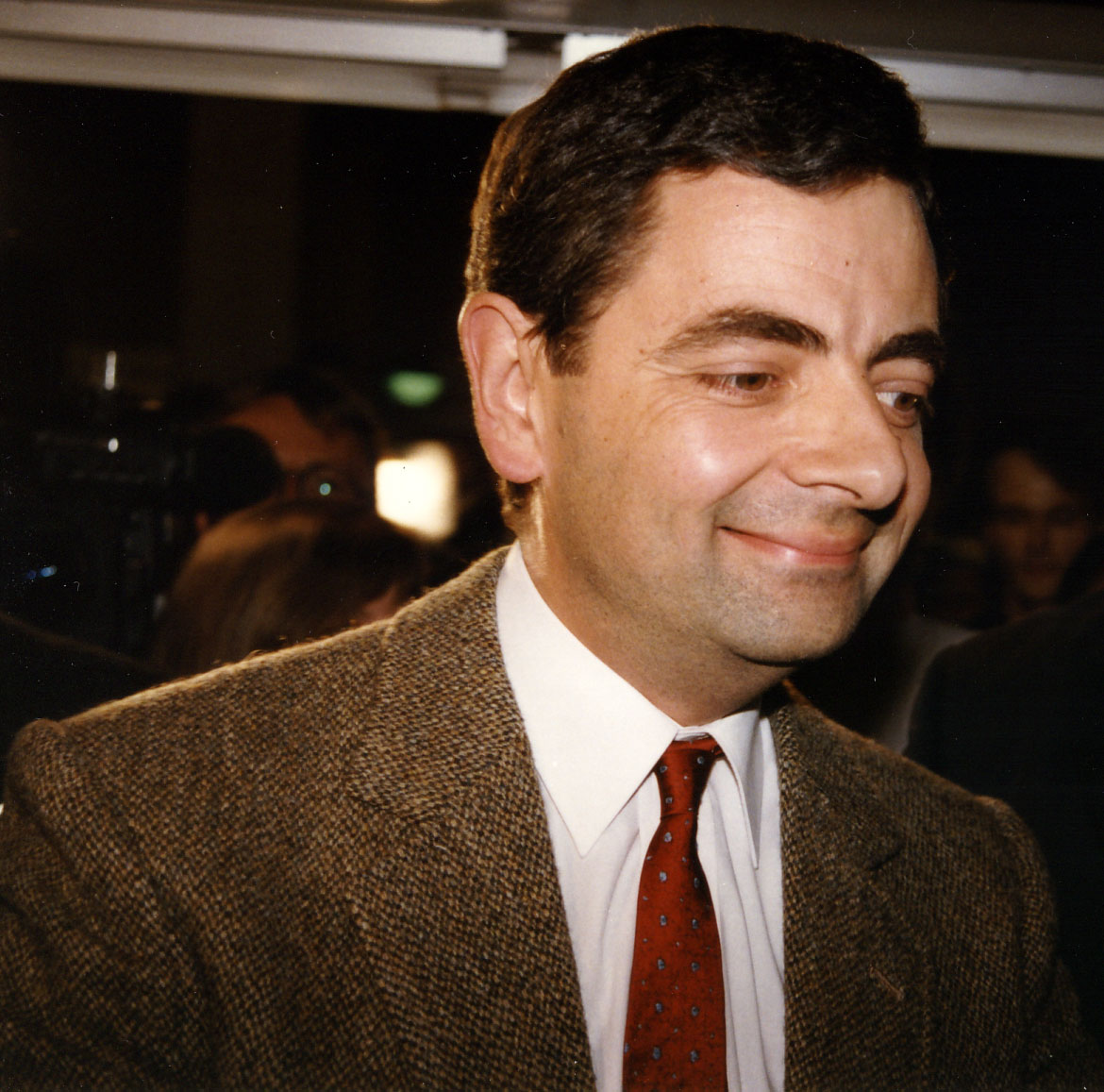 I watched a TV documentary on Rowan Atkinson, the star of Blackadder and Mr Bean. I began thinking about what makes Mr Bean so funny. Part of the thrill is seeing somebody doing something you would never dream of doing seeing the reaction it gets.
I'm sure we've all wanted to do something silly and turn back the clock as soon as we saw the reaction we would get! Ever wanted to put salt instead of sugar in your boss's tea, or streak at a football game, or worse still tell your girlfriend she is fat?!
Mr Bean allows us to live out these "what if" fantasies through his silliness. Rowan Atkinson is a very clever man indeed (an Oxford graduate!), however Mr Bean is a bumbling buffoon who doesn't seem to realise the consequences of his actions. A Comic genius.
Braille
We all know what Braille is but most of us know very little about it. Louis Braille, a Frenchman, lost sight in one eye at the age of three when he stabbed himself in the eye with one of his father's workshop tools (I blame the parents!). He lost the sight in his other eye due to a bizarre condition called Sympathetic Ophthalmia, which is an inflammation of both eyes following injury to one of them. It's like the second eye basically swells up in sympathy! During his time at National Institute for the Blind in Paris he developed a system of six raised dots, which he finished at age 15. He released a booked titled "Method of Writing Words, Music, and Plain Songs by Means of Dots, for Use by the Blind and Arranged for Them" in 1829. Louis died in 1852, aged 43, and it wasn't until two years after his death that his invention was officially recognized.
The Braille system has six dots, arranged in a rectangle 2 dots across by three dots down. Letters are made up by the existence or absence of a dot in the six locations, allowing 64 unique characters to be displayed. In English, Braille can code the alphabet, punctuation, and some commonly used double letter and word codes (such as "th" and "and"). Strangely, numbers require a specific character to proceed the next character, which is then followed by one of the first 10 letters of the alphabet, and "A" corresponds to "1 ", "B" to "2" and so on, until "J" which corresponds to "0". Different character sets are used to code music symbols and mathematical characters.
The system of using characters and giving them an "on" or "off" value makes Braille the very first binary form of encoding characters, similar to the ASCII and Unicode character sets used by computers today. Despite being French, Braille was 150 years ahead of his time!
What I really want to know (and I'm interested in your feedback on this) is: how do blind people know where to look for writing in Braille? It is fair enough to use it in books and on medicine containers etc, but when out and about do they just feel their way over the whole surface of a door in the vain hope of finding a dimpled plaque? If they are with somebody with vision they can show them where the Braille is located, although they would be quicker just telling them what it says.
The Braille system has six dots, arranged in a rectangle 2 dots across by three dots down. Letters are made up by the existence or absence of a dot in the six locations, allowing 64 unique characters to be displayed. In English, Braille can code the alphabet, punctuation, and some commonly used double letter and word codes (such as "th" and "and"). Strangely, numbers require a specific character to proceed the next character, which is then followed by one of the first 10 letters of the alphabet, and "A" corresponds to "1 ", "B" to "2" and so on, until "J" which corresponds to "0". Different character sets are used to code music symbols and mathematical characters.
The system of using characters and giving them an "on" or "off" value makes Braille the very first binary form of encoding characters, similar to the ASCII and Unicode character sets used by computers today. Despite being French, Braille was 150 years ahead of his time!
What I really want to know (and I'm interested in your feedback on this) is: how do blind people know where to look for writing in Braille? It is fair enough to use it in books and on medicine containers etc, but when out and about do they just feel their way over the whole surface of a door in the vain hope of finding a dimpled plaque? If they are with somebody with vision they can show them where the Braille is located, although they would be quicker just telling them what it says.
Welcome
Welcome to "thinking outside the brain", a closer look at everyday life. Comments are welcome on any of the posts, as are suggestions for future posts. Enjoy!
Subscribe to:
Comments (Atom)